
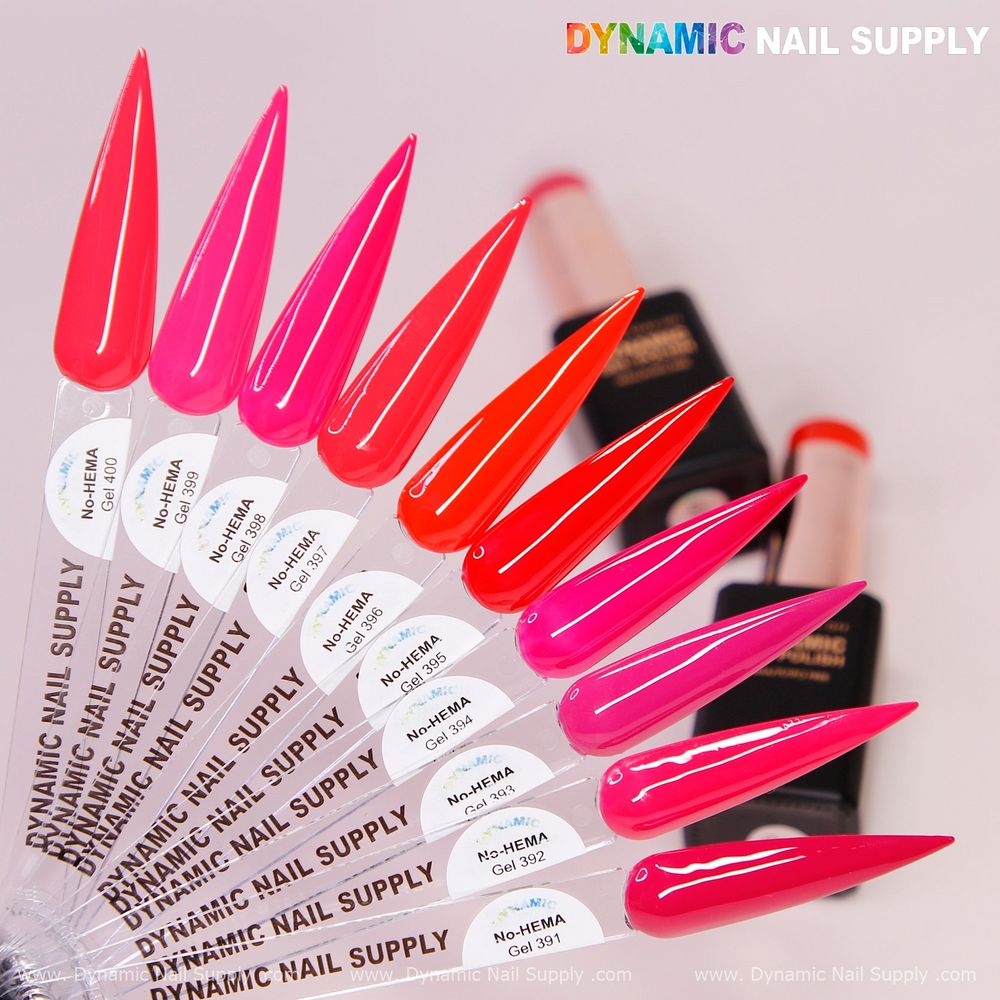
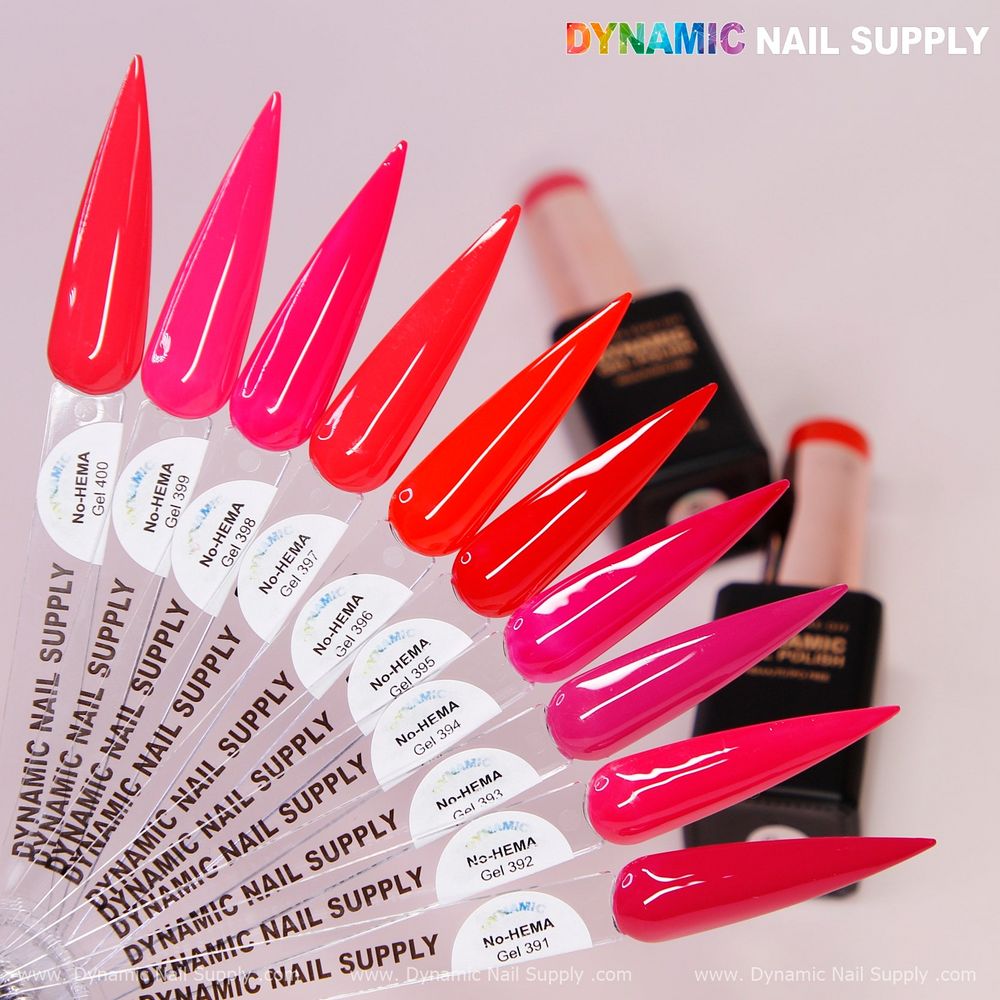
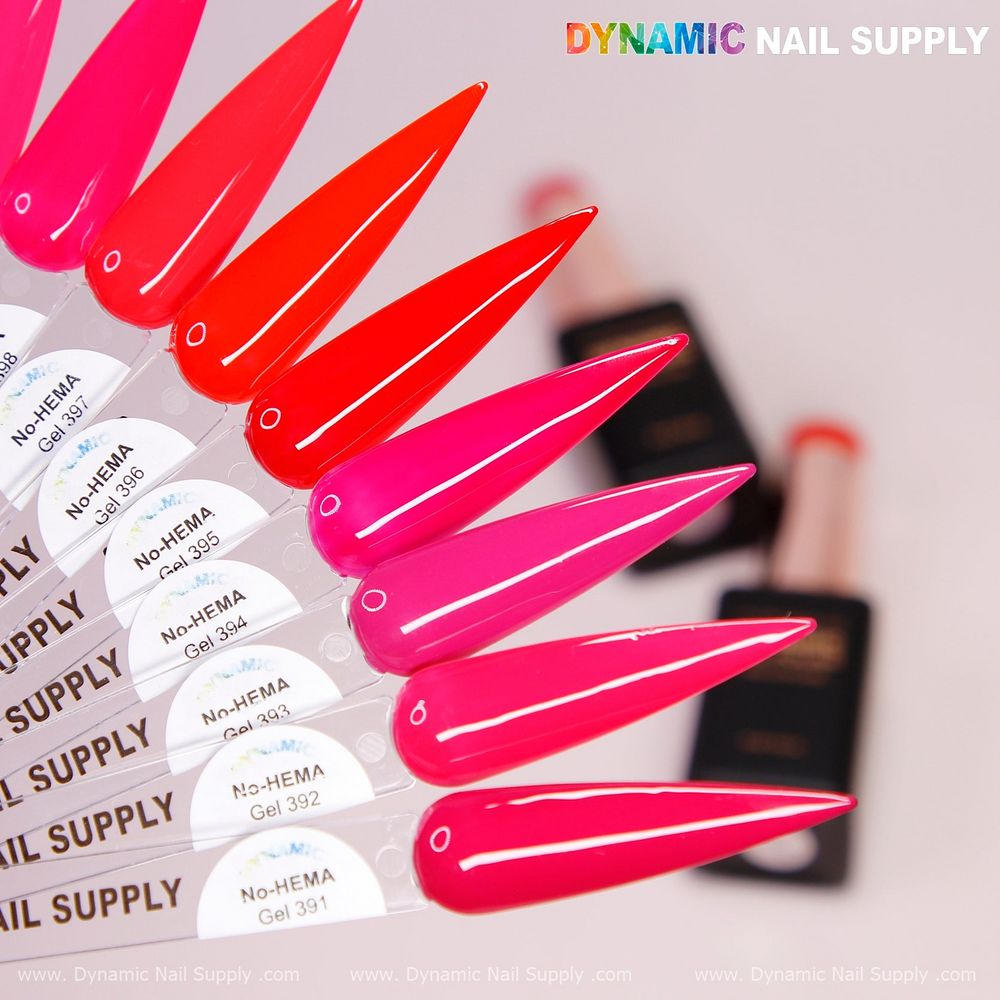
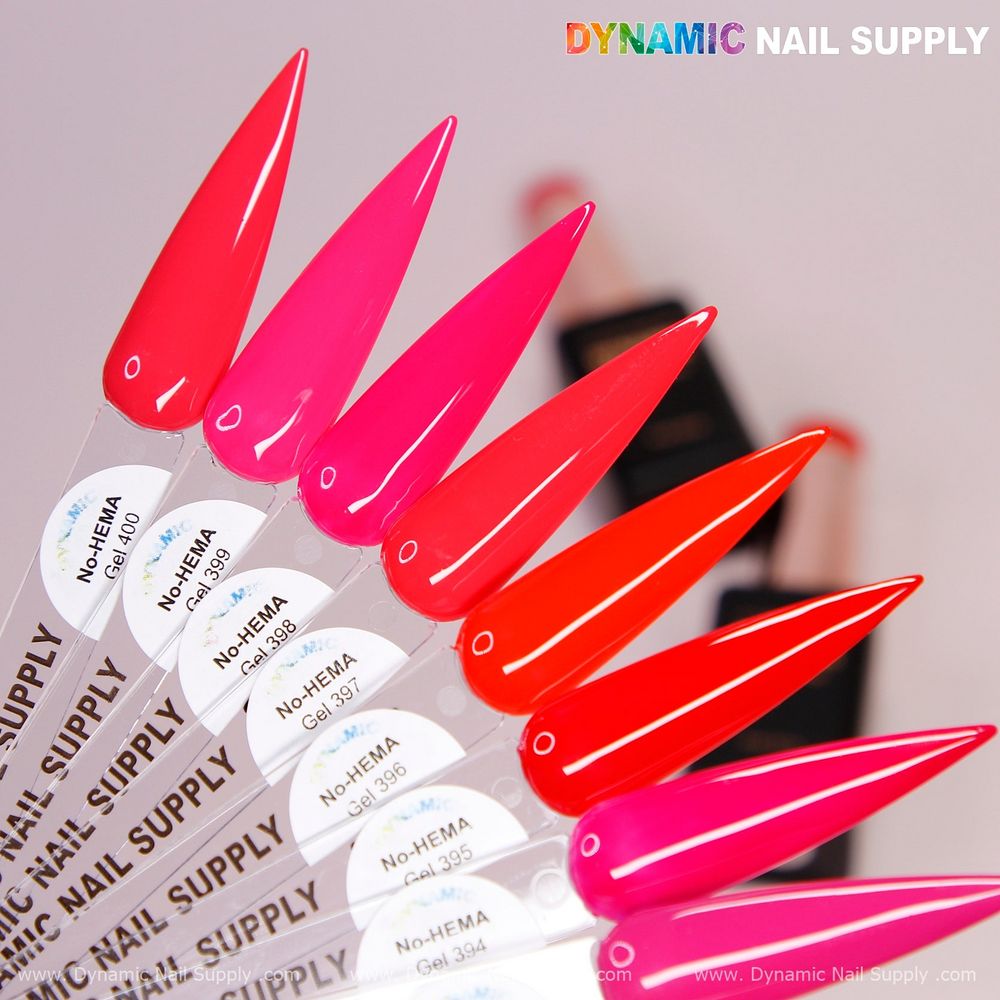
Want a gentler gel option without sacrificing shine or durability? HEMA-free gel polish is becoming popular with clients and technicians who want lower allergy risk while keeping professional results. This guide breaks down the basics and walks you through a simple application routine for the Pretty Red shades (No-HEMA Gel 391–400).
What does “HEMA-free” mean?
HEMA (2‑hydroxyethyl methacrylate) is a common component in many traditional gel formulas that can cause contact allergies in some people. A HEMA-free gel polish replaces HEMA with alternative monomers and resins designed to reduce the chance of skin sensitivity. Manufacturers of these formulas aim to maintain the familiar benefits of gel: high pigmentation, strong adhesion, and glossy finish—while lowering the potential for allergic responses.
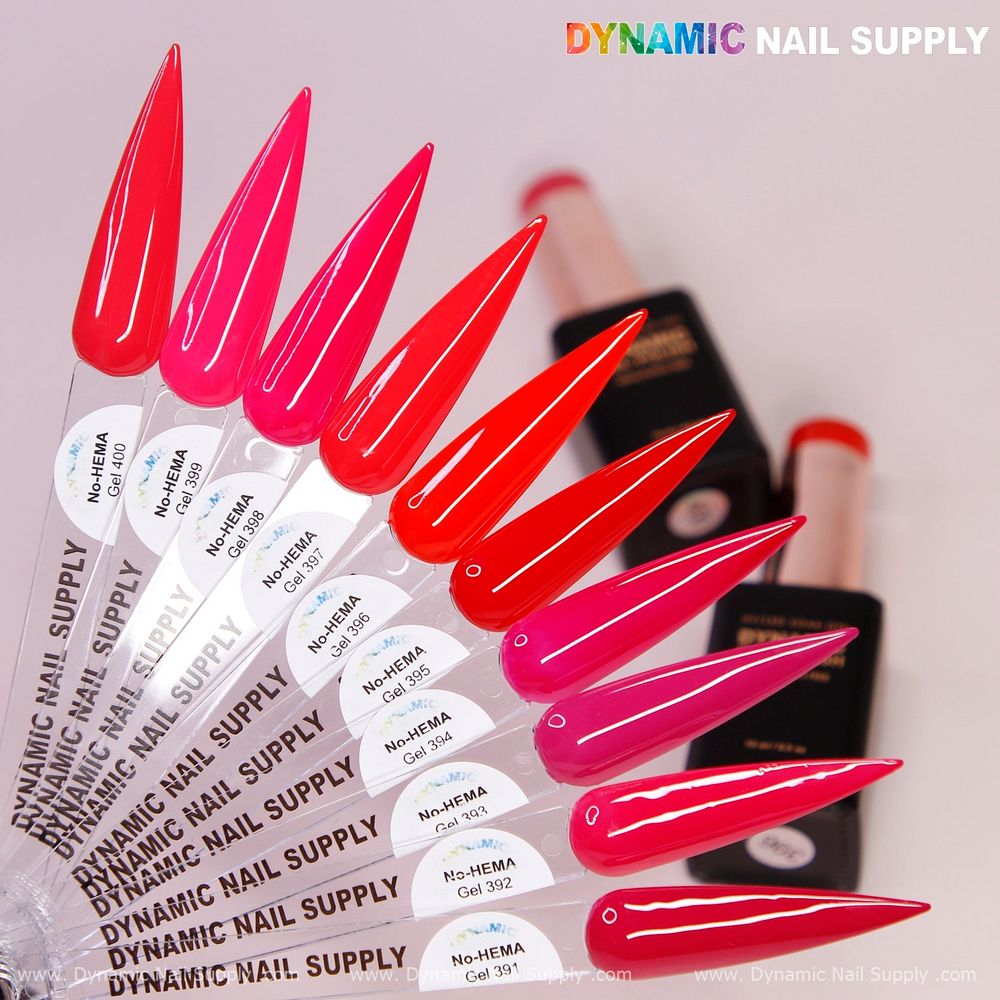
Key product features at a glance
- Size: 15ml bottles—handy for salon use or home kits.
- High pigmentation: Colors in the Pretty Red collection deliver even coverage.
- Thick base formula: Designed to be easy to apply and to hide the nail base when needed.
- Durability claims: Formulated to resist chips and cracks under normal wear.
- Curing time: 60–120 seconds under UV/LED lamp depending on lamp and layer thickness.
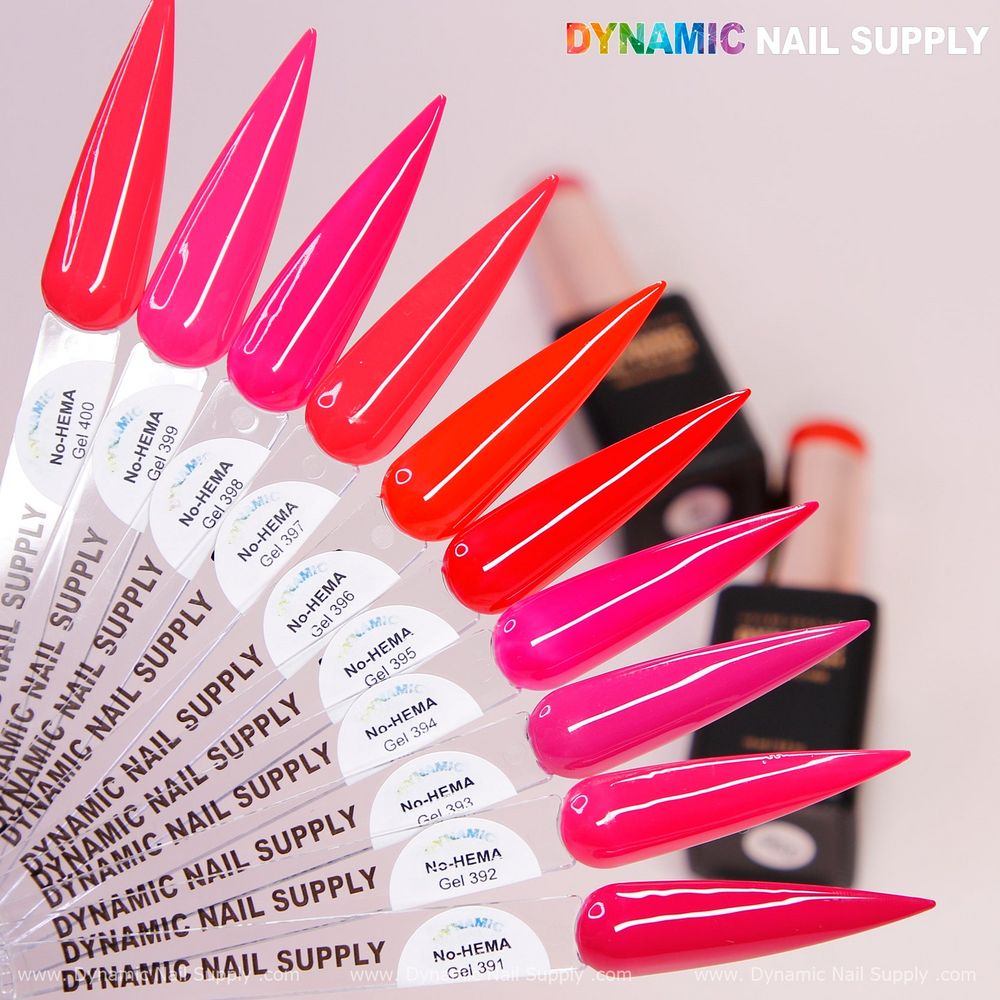
Step-by-step application for beginners
Below is a straightforward routine for an at-home or salon application. Adjust times and product layering to match your lamp and the shade’s opacity.
- Prep the nail: Clean nails, push back cuticles, and gently buff the surface to remove shine for better adhesion.
- Cleanse: Wipe nails with an alcohol wipe or cleanser to remove dust and oils.
- Base: Apply a thin, even base layer. For this thicker base formula, aim for a smooth thin coat rather than a glob to prevent wrinkling when curing.
- Cure: Cure the base 60–120 seconds under your UV/LED lamp. Check your lamp’s instructions for optimal timing.
- Color coats: Apply one thin color coat, cure, then add a second coat for full coverage. Many shades in the No-HEMA Gel 391–400 range reach full opacity after two coats.
- Topcoat: Seal with a compatible topcoat and cure again for 60–120 seconds.
- Finish: Wipe off any tacky inhibition layer if the topcoat requires it, and apply cuticle oil to condition the surrounding skin.
If you want to view product specifics or choose a shade, try the HEMA-free gel polish to find the proper color number for your client or personal kit.
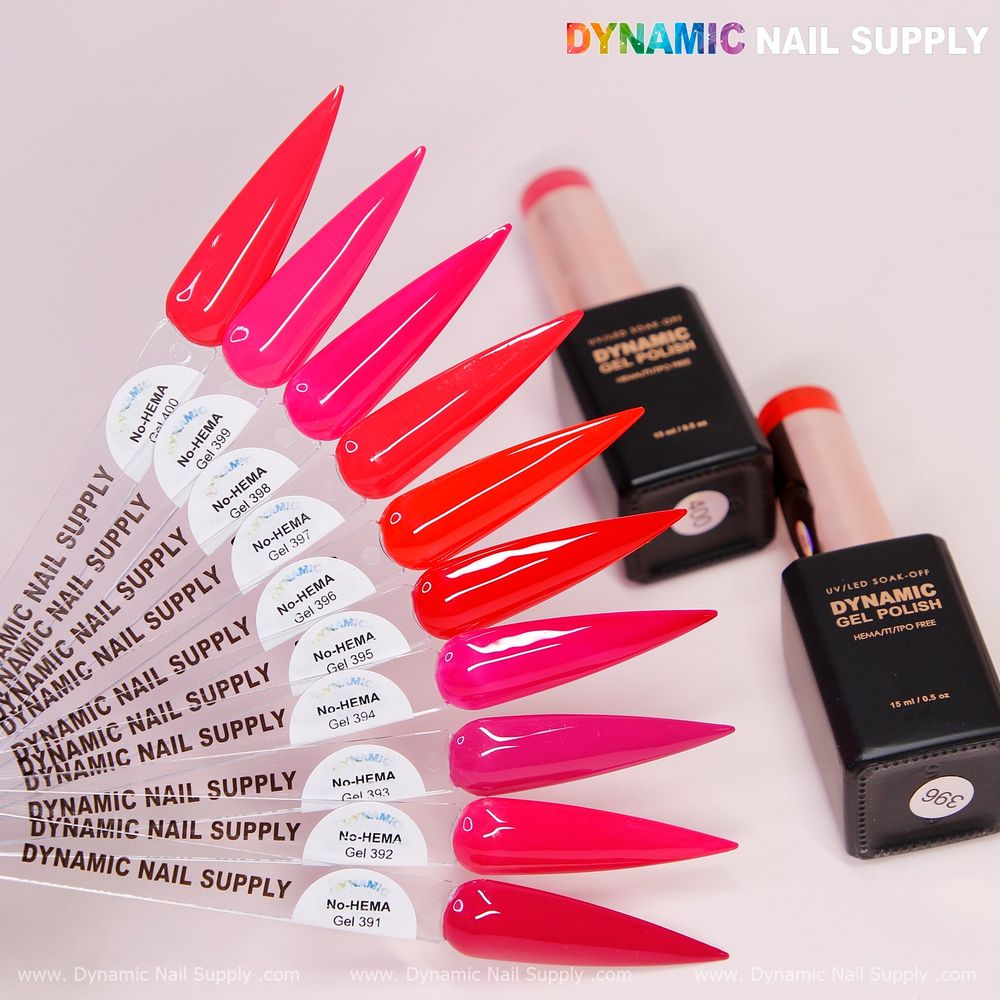
Practical tips for cleaner application
- Use thin, controlled strokes; thick layers increase curing time and the risk of lifting.
- Cap the free edge on every coat to improve chip resistance.
- Match curing times to your lamp: a low‑output lamp may need the full 120 seconds per layer.
- Store bottles upright in a cool, dark place to preserve consistency and pigmentation.
Who should choose HEMA-free gel polish?
HEMA-free gel is a good option for clients with known sensitivities to traditional gel ingredients, or for technicians who want to reduce occupational exposure to potential allergens. It also suits anyone looking for richly pigmented reds from a compact 15ml bottle that promises easy coverage and salon-style shine.
Care, safety, and professional notes
- Although HEMA-free formulations are designed to lower allergy risk, any cosmetic product can cause irritation. Patch testing new clients is a sensible precaution.
- Follow lamp manufacturer guidance for curing and avoid undercuring layers, which can affect durability.
- For nail professionals, switching to HEMA-free options can be part of a broader strategy to create a safer workspace with reduced occupational exposure.
- Individual 15ml bottles are commonly priced at $8.00 each, though prices may change.
Final thoughts
HEMA-free gel polish offers a compromise between safety and performance: easier on sensitive skin while still delivering color payoff, coverage and a glossy finish. For beginners, focusing on proper prep, thin layers, and correct curing will get reliable results with the Pretty Red shades (No-HEMA Gel 391–400). If you’re building a starter kit or updating a salon offering, these HEMA-free options are worth testing alongside your existing gel system.